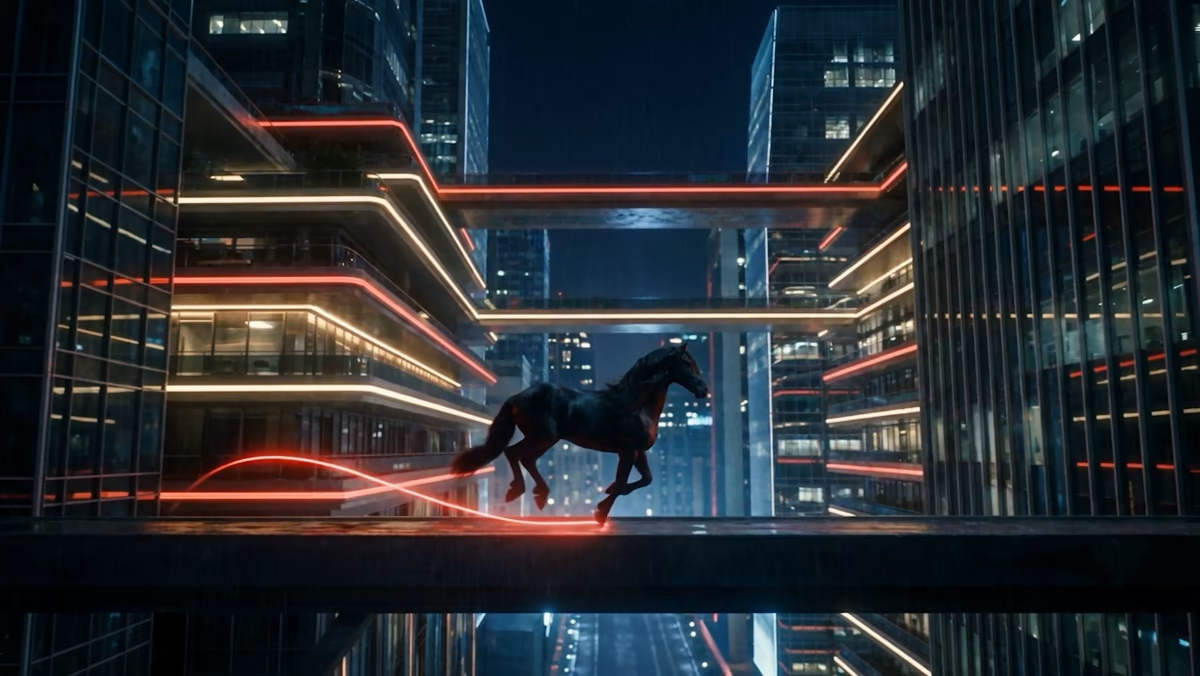
Client project · Semiconductors · 2026
ACS Motion Control
Advanced packaging and a self-learning control algorithm: two teasers, 34 and 39 seconds, for a specialist audience on LinkedIn.
- 34 s · 39 s
- 16:9
- Tech teaser
- AI-generated
Service · AI film production
For me, AI film production means images from generative models, made like a real film, from concept and direction to edit, sound and grade. For businesses and agencies in Austria, Germany, Switzerland and internationally, produced in Vienna.
Technical and explainer filmfrom €7,000
AI commercialfrom €5,000
net plus VAT · businesses only
We agree on the AI labelling together before production starts.
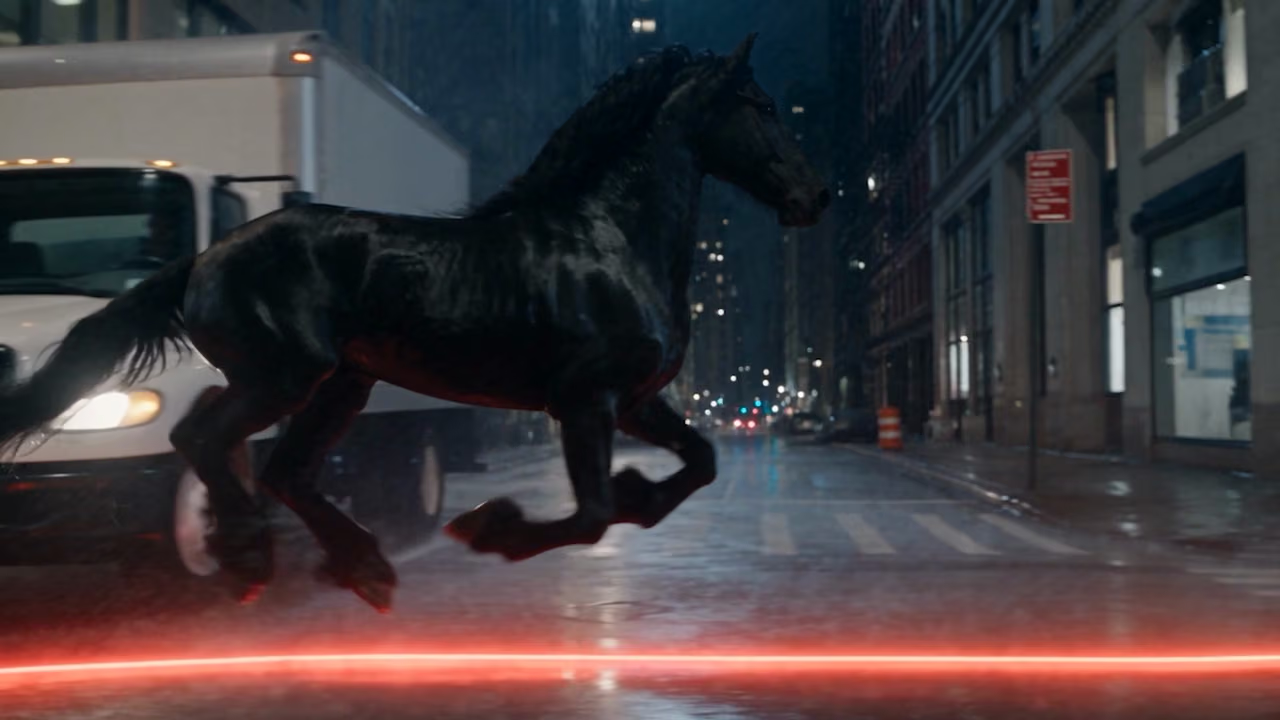
“Solid Ground” for ACS Motion Control
AI films for clients includingACS Motion ControlHOERBIGERÖsterreichische Klassenlotterie
5.0 from 3 Google reviewsFor machines, processes and software: what cannot be filmed becomes clear in 60 to 120 seconds.
In detail
When a product looks like plain sheet metal in a photo and only shows what it can do in motion: precision, processes inside, software in the background.
Typical uses are the trade fair stand and the sales meeting, the product page and LinkedIn, training and internal presentations.
You approve the script on technical grounds before a single image is made. Style frames then show every shot as a still.
Logos and lettering come from your original files. Product views are based on your photos or CAD data; the world around them is generated.
Technical films in German or English; one language version is included, each further version costs extra. The voice-over is synthetic and not modelled on any real person. We agree on the text and the pronunciation of technical terms in advance.
Client project · Semiconductors · 2026
Advanced packaging and a self-learning control algorithm: two teasers, 34 and 39 seconds, for a specialist audience on LinkedIn.
Two teasers, 34 and 39 seconds long: not a classic explainer film, but the same task, translating an invisible capability into images.
You own the client relationship, I deliver the AI production.
Example from practice: The spot for the Austrian Klassenlotterie was made to the media agency’s brief. See the project
Request an agency projectIt starts with a story, not a prompt: goal, audience and use, then a script for your approval and a written fixed-price quote.
The visual world comes first, as style frames from the models best suited to each scene. You approve every shot before it is animated.
The moving image is built from the approved style frames. Hybrid where it helps: when real people or a real product take centre stage, we combine it with a live-action shoot.
Post-production under one roof: edit, grade, sound design and music, then every format you need. Delivery follows your sign-off.
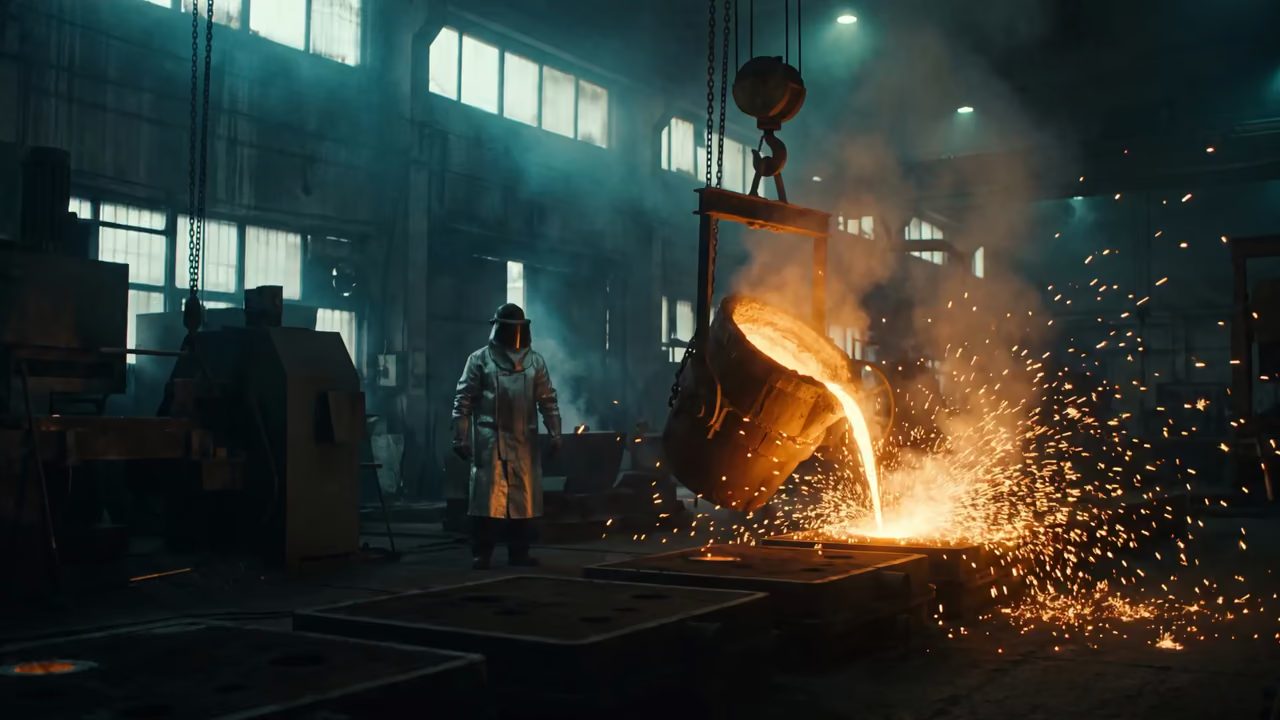 AI-generated
Labelling, people, brands and logos: settled before we start. See all points
Complete brand worlds from the model, from the concept to the finished spot.
A real shoot plus generative extension, when real products or people are at the centre.
Making ideas visible before a big budget is committed.
Historical scenes, future worlds, the physically unshootable.
Anyone can rent the tools. What separates an AI film from a tech demo is film craft: dramaturgy, visual language, editing rhythm, sound.
Behind that are more than ten years of film production with real cameras, real sets and real edits.
You talk to me directly; production runs with my team at Filmspektakel GmbH, a Vienna film production company.
AI film production is film production in which the images come from generative AI models instead of a camera and set. Peter Jablonowski follows the process of a real film production: concept, visual world, edit, sound and grade.
AI video production and AI film production mean the same thing: moving images from generative AI models, as does ‘generative video production’. The difference is the standard: Peter Jablonowski handles concept, direction, edit, sound and grade as for a film.
Fully generative AI film production suits anything that could hardly be shot for real: invisible technology, historical scenes, products before launch. Hybrid, a real shoot plus AI, is often better when real people or a real product take centre stage.
The schedule of an AI film production with Peter Jablonowski depends on length, formats and your approvals. It is set out in the written fixed-price quote.
Peter Jablonowski works with agencies as the AI production in the background or as a visible partner, depending on the project. You bring the brief, board or script; I deliver individual shots or the finished spot within your workflow.
Peter Jablonowski makes technical films with AI for industry and technology, such as motion control for semiconductor manufacturing, and for companies whose products or processes need explaining. What matters is not the industry but whether something is hard to film.
Google review (excerpt)★★★★★
“[…] He took the time to understand our company, our brand, and a very technical capability offering, then turned that understanding into a creative concept that was remarkably accurate from the start. He just got it. […]”
Start a project
Project inquiries for businesses and agencies. I make films on commission, not a DIY AI tool. Projects typically start at €5,000 net; short clips as an add-on from €2,500.
net plus VAT · businesses only · USD quotes on request · Trying it yourself? Guide
Reply from Peter personally, usually within 24 hours · Contract and invoicing via Filmspektakel GmbH, Vienna
