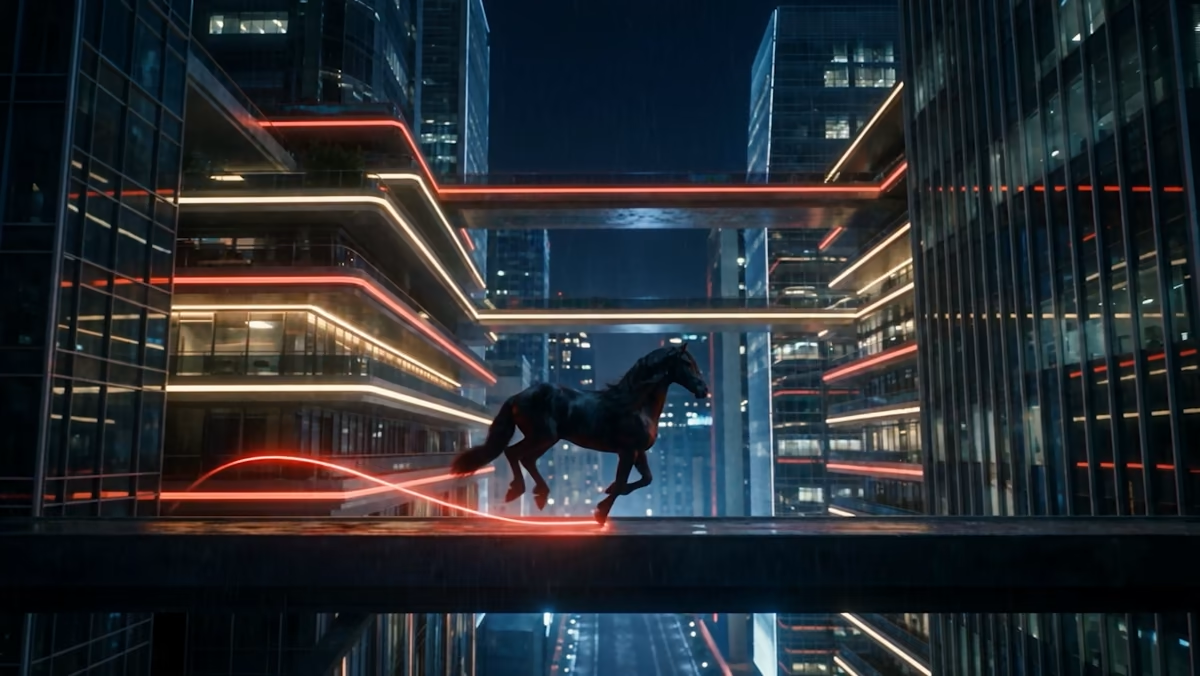
Client project · Semiconductors · USA · 2026
ACS Motion Control
Two AI teasers that make precision in semiconductor manufacturing visible.
- 34 s · 39 s
- 16:9
- Tech teaser
- AI-generated
Examples & Making-ofs
Most example lists show other people’s videos. Here you first see two client projects, then four of my own concept films with tools, making-of facts and learnings, plus six third-party examples for context.
Client project · Semiconductors · USA · 2026
Two AI teasers that make precision in semiconductor manufacturing visible.
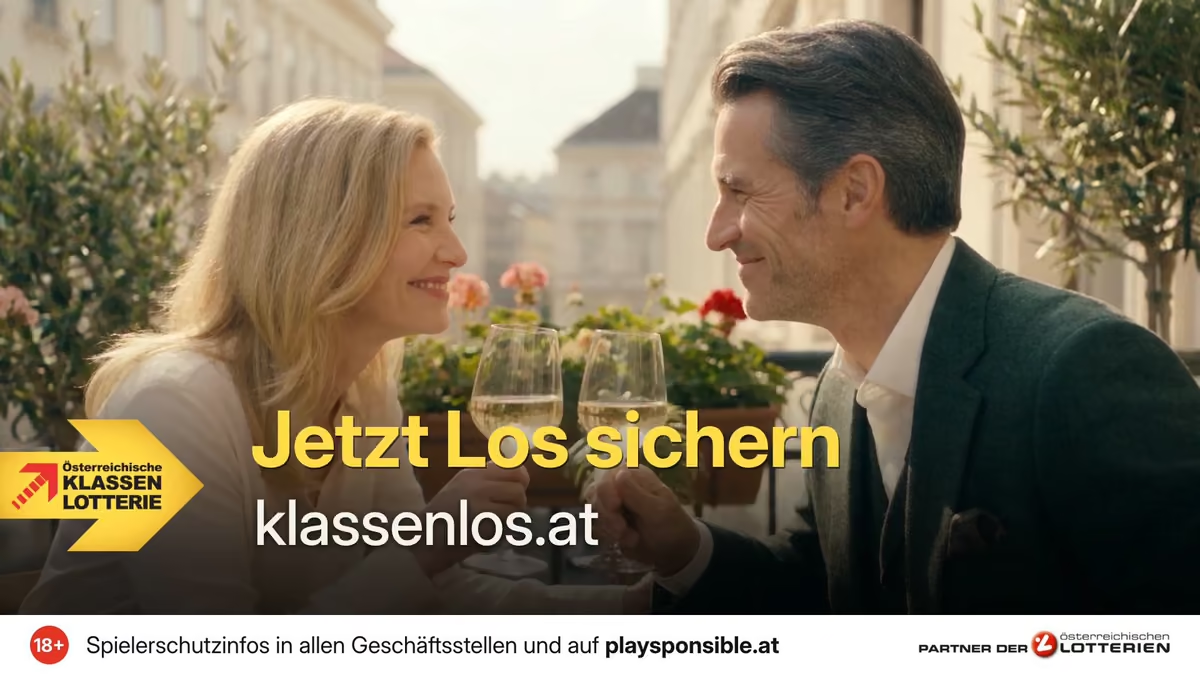
Client project · Lottery · Vienna · 2026
An AI commercial for YouTube, plus a Shorts version in vertical format.
Self-initiated, without a briefing and without approvals. The brands shown are not clients.
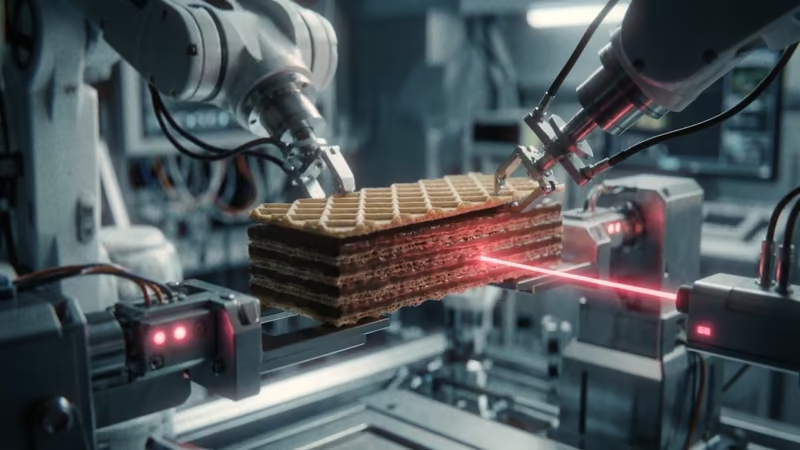
Concept film 01 · Spec
A tribute to Austria’s finest snack, fully generative and clearly declared as unofficial fan art. Most of the work went into animation with Kling.
The learning
A self-initiated spec with no client, coordination or brand guidelines is a prototype. A client project is priced differently, because consistency across every shot and coordination with you come into play.
What does a client project cost? Pricing and process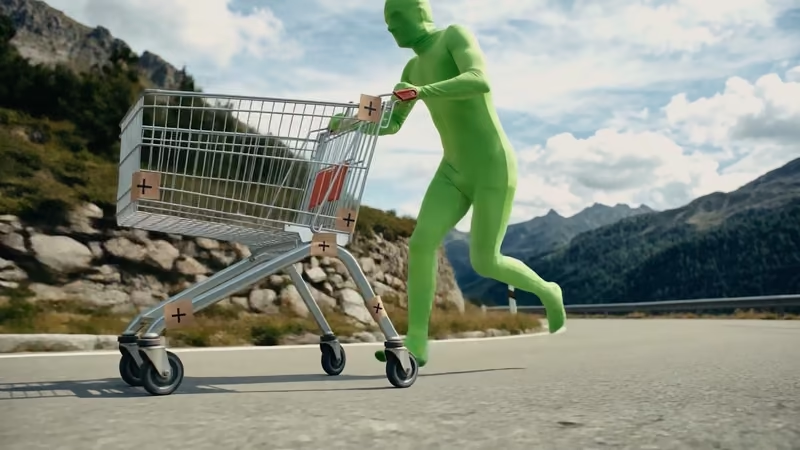
Concept film 02 · SpecSatire
A high-end car commercial without a car: neither the Alps nor the vehicle is real, not even the making-of. The mishaps behind the scenes are AI-generated too and part of the satire.
The learning
The joke lives in deliberate hallucinations, from the UFO to the misspelled “PORCH”.
Making AI look convincing is getting easier. Steering it deliberately, even making it fail on purpose, is directing work.
Concept film 03 · SpecContest
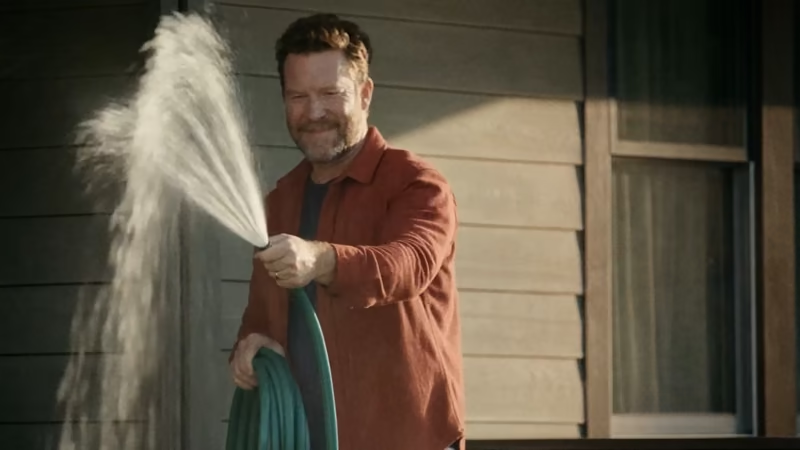
A coming-of-age film for the world’s most mundane product, a garden hose, submitted to the Runway Big Ad Contest.
The learning
The consistency trick: the same house from exactly the same camera perspective across the decades, linked by time-lapse transitions.
Brand consistency comes from the system, not the prompt. Plan your continuity like an editor and you get sequences instead of clips.
Concept film 04 · Spec
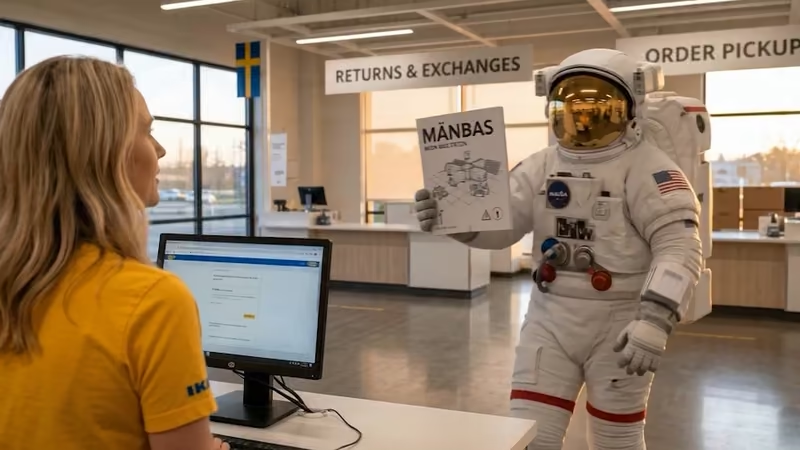
A two-minute concept film, made by one person. When the astronaut’s voice drifted between shots, the workaround: export the dialogue, run it through Artlist’s speech-to-speech, drop it back into the edit.
The learning
The idea is most of the work. A clean script beats any tool; voice and character consistency remain the bottleneck.
In depth · Tools
Not an affiliate list, not a ranking: these are the tools the spots on this page were actually made with. As of October 2026; in this field, statements age in months.
Nano Banana Pro and Nano Banana 2 are my standard for scene stills, reference frames and consistent sets. The visual world is built as a series of stills first, then animated.
Generating video directly burns iterations in the most expensive step.
Kling 2.6 and 3.0 are my workhorse for image-to-video. Seedance 2 carried the long, emotional shots in the IKEA film; I use Runway for individual editing features.
In the client project for the Austrian Klassenlotterie, the moving image ran through Seedance 2.5 in reference mode, with character references for two fictional characters.
Artlist covers voice-over, music and sound design; ChatGPT is a sparring partner for concept and script. Editing, mixing and finishing are done the traditional way in Premiere Pro.
In the end, the tool question is the least important one in an AI film production: idea and craft decide.
Third-party examples · for context
The world’s best-known AI commercial example: in 2024, Coca-Cola remade its Christmas ad “Holidays Are Coming” entirely with generative AI. Gliding truck wheels and eerily smiling people drew broad criticism.
The 2025 version turned out noticeably better, with less unguided generation and more craft.
Sources: The Decoder (German) · Hollywood Reporter · Marketing Week
The lesson: whether global brand or mid-size company, the difference between “AI slop” and advertising lies in concept, consistency and post-production.
As of 14 October 2026
The Salzkammergut tourism board shows the Schafberg, its lakes and mountains in a fully AI-generated brand film in the style of Gustav Klimt, made with Daniel Gollner of the agency contentkumpanei.
The spot ran on TV, in cinemas and online, and won gold at the TAI Werbe Grand Prix 2026. Here, AI enables a look no camera could capture.
Sources: Salzkammergut Tourismus (German) · marketingScout (German) · Atterseelife (German)
Vodka brand Svedka ran a 30-second spot during Super Bowl LX that the studio Silverside AI created almost entirely by prompting; the same studio was involved in Coca-Cola’s 2025 holiday ad. According to parent company Sazerac, the goal was storytelling, not efficiency.
Adweek summed up the verdict of creatives: forgettable, because AI isn’t an idea.
Sources: Hollywood Reporter · Adweek
Prediction market Kalshi ran a fully AI-generated spot during the 2025 NBA Finals, made by creator PJ Accetturo with Google Veo 3: roughly 300 to 400 generations for 15 usable clips.
Over 3 million views within a week.
Sources: NPR · Hollywood Reporter
“The Origin of Toys’R’Us” was the first major brand film made with OpenAI’s Sora, which premiered at Cannes Lions 2024. Reactions ranged from awe to “eerie”: technology alone doesn’t create brand warmth.
Sources: Marketing Dive · Engadget
“The Rhythm of Life”, directed by Sebastian Strasser, was Vodafone’s first fully AI-generated commercial. Every image and every person came from AI, refined by around 30 people in post-production at Lipstick Berlin.
Sources: slashCAM (German) · Campaign Germany (German)
Well-known examples of AI advertising are Coca-Cola’s “Holidays Are Coming” (2024 and 2025), Kalshi’s 2025 NBA Finals spot, “The Origin of Toys’R’Us” made with Sora, Vodafone’s “The Rhythm of Life” and Svedka’s 2026 Super Bowl spot. From Austria come the Salzkammergut region’s AI brand film in the style of Gustav Klimt (2026) and Peter Jablonowski’s AI commercial for the Austrian Klassenlotterie.
A concept film or spec is a commercial made without a client: self-initiated, without a briefing and without approval from the brand shown. Peter Jablonowski’s four specs show craft and tools, but they are prototypes. A client project is priced differently, because coordination and brand guidelines come into play.
In Peter Jablonowski’s experience, a good AI commercial needs the same as any commercial: a clear idea, a brand that stays stable across every shot, and a clean finish in edit and sound. Coca-Cola and Toys’R’Us show that technology alone doesn’t create brand warmth.
AI commercials from €5,000 net, exclusively for businesses.

Peter Jablonowski · AI filmmaker from Vienna, more than ten years of film craft. Produced with the team at Filmspektakel GmbH. More about me